Today I want to share with you the history of gambling in Texas. I’ve lived in Dallas for two years now and have some observations on this topic, both professional and personal.
We all know about Texas Hold’em, the world-famous poker game that, ironically, is essentially banned in its home state. Yet underground tournaments definitely exist, where men and women gather and play for money even though it’s completely illegal. I’ve stumbled into such shady places by accident a few times.
I’ve also seen truly illegal slot setups twice, just computers with mice running online slots. It’s grim and not appealing at all. The last time I saw something similar was back in Ukraine before gambling was legalized there. Through a friend, I even talked with someone who used to run this kind of business in Dallas. It’s a criminal scene, but interesting because there’s demand for it.
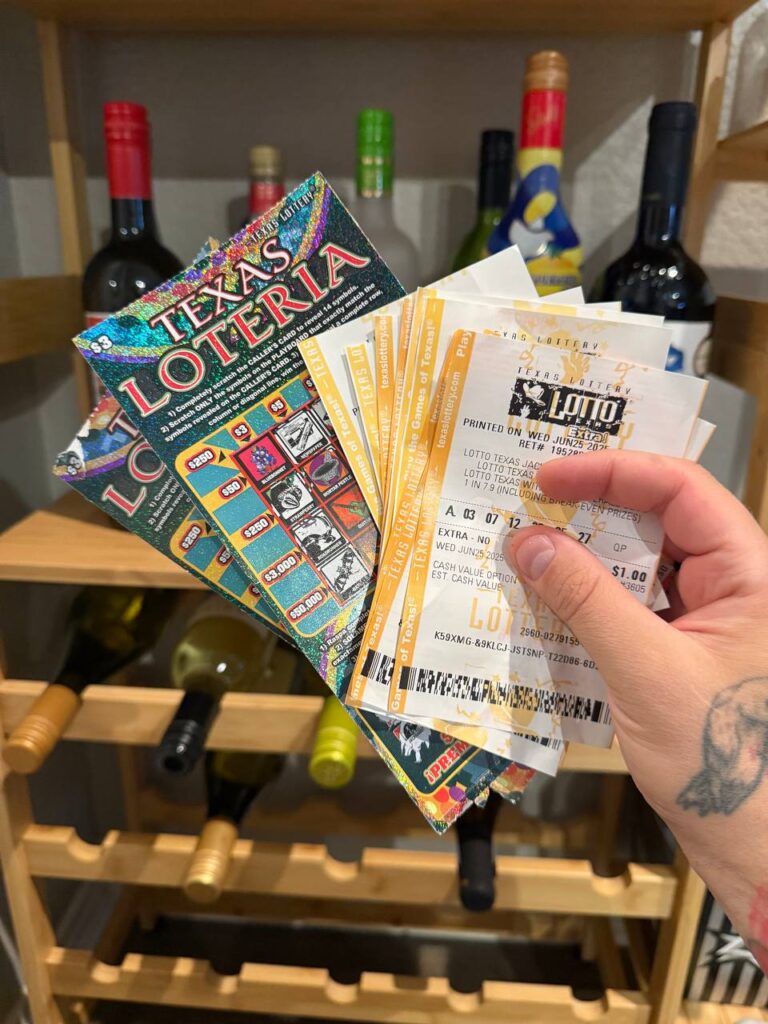
On the legal side, my wife and I play Texas Lotto ourselves. I used to buy Powerball tickets, but realized it’s nicer to see someone from your own state win the jackpot. That’s how I discovered Texas Lotto, which I recommend. There are also scratch cards from the same lottery commission. I’ll probably write a separate review on them later.
Legal Gambling in Texas – full info
There are hybrid forms too that don’t fall under strict regulation. For example, Fantasy Sports, which is essentially sports betting but isn’t yet formally regulated by state authorities. I’m not talking about offshore operators here, though I’ve seen people at sporting events or just in daily life spinning slots on their phones.
I’ve been told the reason for this policy isn’t just about money but also moral and religious factors. Texas authorities traditionally can’t justify full gambling legalization for these reasons.
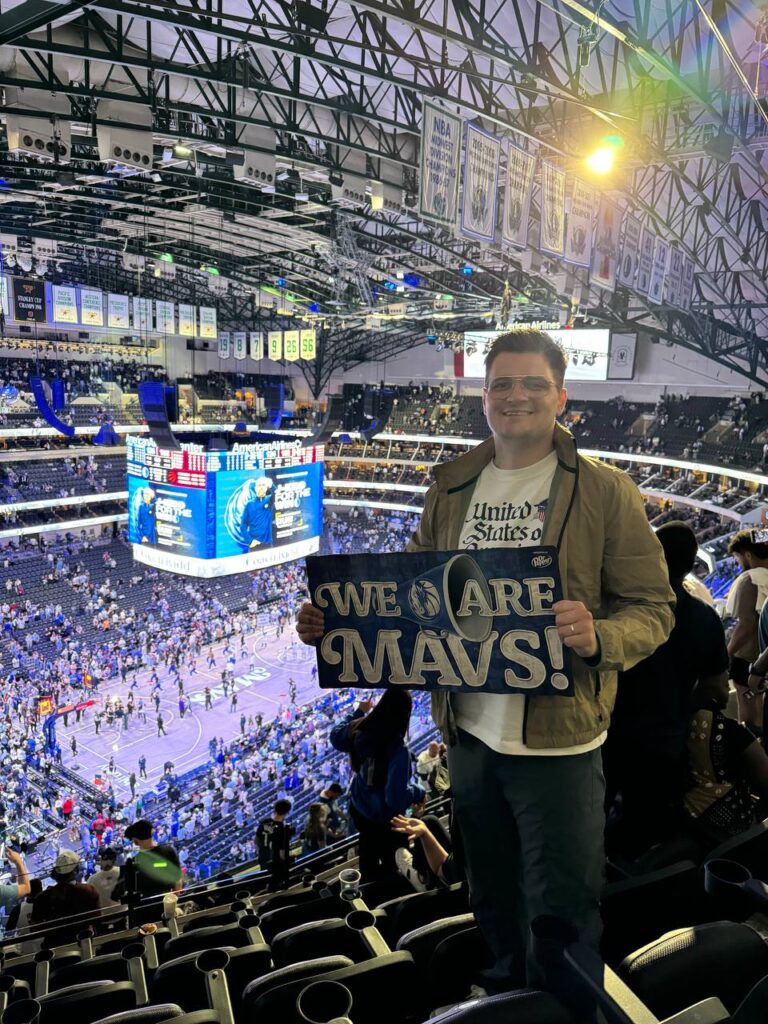
In 2023, the Adelson family, owners of Las Vegas Sands Corp, bought the controlling stake in the Dallas Mavericks for around $3.5 billion. Sands is the owner of major Las Vegas casinos (see the section on the history of gambling in Nevada above). The Adelson family also purchased land next to the American Airlines Center in Dallas for a potential resort casino, of course, contingent on future legalization.
To understand the market: Dallas is about 80 miles from the nearest Oklahoma casino and around 190 miles from Louisiana casinos. That’s why so much attention is focused on Texas as a potential gold mine for the industry.
Personally, I’ll say this: I’m looking forward to gambling being legalized here and hope to take an active part when it is.
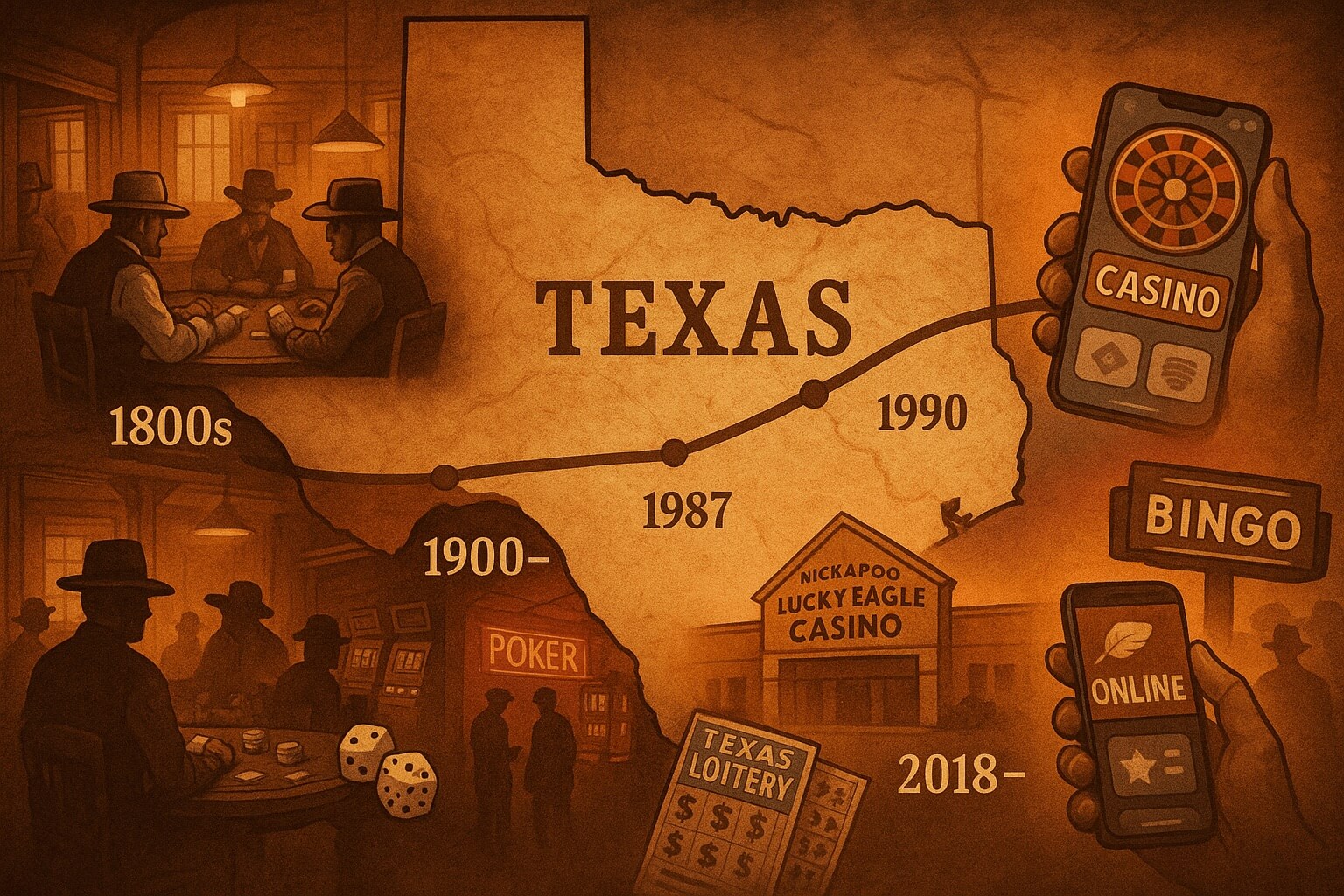
1800s: Frontier Gambling in Texas and Poker Culture
Texas in the early 1800s was defined by saloons, trading posts, and riverboat landings where gambling was part of daily life. Games of chance, including dice, faro, and early poker variants, were common in frontier towns such as San Antonio and Galveston. Soldiers stationed in forts also played cards for small wagers, making gambling a popular pastime among settlers (Texas State Historical Association).
By the mid-1800s, traveling gamblers and professional card sharks worked the riverboat routes along the Gulf Coast and up the Mississippi, bringing refined poker rules and new variations with them. These gamblers were notorious for cheating and marked decks but also helped standardize poker gameplay across the South, contributing to the birth of what became Texas Hold’em (Smithsonian Magazine).
Late 19th-century Texas saw growing tension between local authorities and gambling establishments. While Galveston developed a reputation as a vice-friendly port city with tolerated gambling halls, other counties enforced stricter bans and raids. The patchwork of law enforcement created an uneven legal landscape, laying the groundwork for decades of contradictory gambling laws (Texas Monthly).
Gambling thrived in 19th-century Texas saloons and riverboats. Poker, dice, and card games were widespread in towns like Galveston and San Antonio, laying the foundation for the creation of Texas Hold’em. Ironically, Texas Hold’em remains heavily restricted in its home state (Texas State Historical Association).
1900–1987: Crime, Prohibition, and Evolving Gambling Laws
From 1900 through the 1920s, Texas cities like Houston and Galveston became hubs for underground poker rooms, dice games, and slot machines despite repeated crackdowns. During Prohibition, illegal clubs thrived alongside bootlegging, with notorious crime bosses bribing local officials. Galveston earned its reputation as the ‘Free State of Galveston’ with lavish illegal casinos and poker halls for oil barons and tourists. Raids were frequent but often symbolic, with clubs reopening days later.
In 1933, facing Great Depression-era deficits, lawmakers legalized pari-mutuel betting on horse and dog racing to generate revenue. Tracks opened statewide, offering regulated wagering. However, allegations of race-fixing and corruption led to the repeal of pari-mutuel betting by 1937. Despite the ban, illegal betting and private games continued to flourish in back rooms and private clubs, with enforcement uneven across counties.
For five decades, Texas law maintained strict anti-casino policies while loosely tolerating some social poker games in private spaces. Meanwhile, organized crime networks in cities like Dallas and San Antonio continued to run underground poker tournaments and unlicensed slot machines. It wasn’t until 1987 that voters approved relegalizing pari-mutuel betting, marking a formal return of state-regulated wagering through tracks like Lone Star Park near Dallas-Fort Worth (Texas State Library).: Crime, Prohibition, and Evolving Gambling Laws
From 1900 through the 1920s, Texas cities like Houston and Galveston became hubs for underground poker rooms, dice games, and slot machines despite repeated crackdowns. During Prohibition, illegal clubs thrived alongside bootlegging, with notorious crime bosses bribing local officials. Galveston earned its reputation as the ‘Free State of Galveston’ with lavish illegal casinos and poker halls for oil barons and tourists. Raids were frequent but often symbolic, with clubs reopening days later (Texas Monthly, link).
In 1933, facing Great Depression-era deficits, lawmakers legalized pari-mutuel betting on horse and dog racing to generate revenue. Tracks opened statewide, offering regulated wagering. However, allegations of race-fixing and corruption led to the repeal of pari-mutuel betting by 1937. Despite the ban, illegal betting and private games continued to flourish in back rooms and private clubs, with enforcement uneven across counties.
For five decades, Texas law maintained strict anti-casino policies while loosely tolerating some social poker games in private spaces. Meanwhile, organized crime networks in cities like Dallas and San Antonio continued to run underground poker tournaments and unlicensed slot machines. It wasn’t until 1987 that voters approved relegalizing pari-mutuel betting, marking a formal return of state-regulated wagering through tracks like Lone Star Park near Dallas-Fort Worth.
In 1933, to combat the Great Depression’s economic devastation and curb illegal betting, Texas legalized pari-mutuel wagering on horse and dog races. New tracks opened statewide, promising regulation and state revenue. However, corruption scandals and race-fixing allegations led to repeal by 1937. It would take until 1987 for voters to restore pari-mutuel betting, with modern venues like Lone Star Park near Dallas-Fort Worth reflecting the industry’s return.
To counter the Great Depression, Texas legalized pari-mutuel betting on horse and dog racing in 1933. Tracks opened statewide, but scandals led to its ban in 1937. Voters re-approved it in 1987, with venues like Lone Star Park operating today.
1990–2018: Texas Lottery, Tribal Gaming, and Legislative Stalemate
In 1991, voters passed a constitutional amendment creating the Texas Lottery Commission. Sales began in 1992, funding education statewide. Meanwhile, tribal venues like the Kickapoo Lucky Eagle Casino opened under federal law in Eagle Pass, though other tribes faced ongoing court battles over gaming rights. Texas law maintained bans on casino-style gambling outside tightly regulated charitable bingo and raffles.
Throughout the 1990s and 2000s, multiple bills proposed legalizing resort casinos, especially near North Texas, along with sports betting and online casino regulation. Lobbyists from major Las Vegas operators pitched billion-dollar resorts and new tax revenue. But religious groups and conservative lawmakers kept these efforts stalled. As a result, Texans continued traveling to Oklahoma and Louisiana for gambling while offshore betting sites targeted Texas residents illegally.
In 1991, voters passed a constitutional amendment creating the Texas Lottery Commission. Sales began in 1992, funding education through games like Lotto Texas and scratch-offs across the state. Meanwhile, tribal gaming like Kickapoo Lucky Eagle Casino emerged under federal law, though other tribes faced constant legal battles over their rights to operate electronic gaming and slots. Texas law remained hostile to casino-style gambling, allowing only tightly regulated charitable bingo and raffles.
Throughout the 1990s and 2000s, legislators proposed bills for resort casinos, particularly near North Texas, and for sports betting and online casino regulation. Lobbyists, including major Las Vegas operators, targeted the legislature, promising jobs and tourism revenue. But moral objections and religious lobbying ensured none passed. As a result, Texans continued crossing borders to gamble in Oklahoma and Louisiana while online offshore betting targeted them illegally.
In 1991, voters passed a constitutional amendment creating the Texas Lottery Commission. Sales began in 1992, funding education through games like Lotto Texas and scratch-offs available across North Texas.
Tribal venues like Kickapoo Lucky Eagle Casino operate under federal law near Eagle Pass. Other tribes face legal battles over casino rights. Texas law only allows charitable bingo and raffles, keeping most casino-style gambling banned.
2018–Present: Current Legal and Grey-Area Gambling in Texas
Since 2018, when the U.S. Supreme Court struck down the federal ban on sports betting, each state has been allowed to set its own laws. Texas has not legalized sportsbooks or online casinos, maintaining some of the strictest gambling rules in the country. However, legal forms of gambling include the state lottery, pari-mutuel betting at tracks like Lone Star Park, charitable bingo, and raffles. There is also a grey area with fantasy sports apps, scratch-off cards sold at retail, and poker social clubs that attempt to skirt gambling bans by charging entry fees instead of taking house rake. Tribal gaming like Kickapoo Lucky Eagle Casino continues under federal compacts. Texans often travel to Oklahoma or Louisiana for full casino gambling.
Ongoing: North Texas Casino Proposals
Major companies lobby for resort-style casinos in North Texas, promising jobs and revenue. Bills continue to stall in Austin, leaving Texans to travel to Oklahoma and Louisiana for full casino experiences.
BKFC 76 Texas – bareknuckle – read
Legal Gambling in Texas – full info
FC Dallas vs Minnesota Review – read