Legal Gambling in Texas: Current Status and Push for Reform
Legal gambling in Texas remains highly restricted, but pressure for change is increasing. Since the federal legalization of sports betting in 2018, lawmakers and business leaders have renewed efforts to introduce resort-style casinos and regulated betting. In February 2025, Texas legislators introduced a bill to authorize seven large scale casino resorts across the state, including two planned for the Dallas – Fort Worth area. While most forms of gambling are still prohibited, the proposal has received broad support. Miriam Adelson, majority owner of the Dallas Mavericks, contributed 16 million dollars toward lobbying activities within a ten-month period, signaling growing momentum for reform.
Robinhood Legal Betting in Texas?
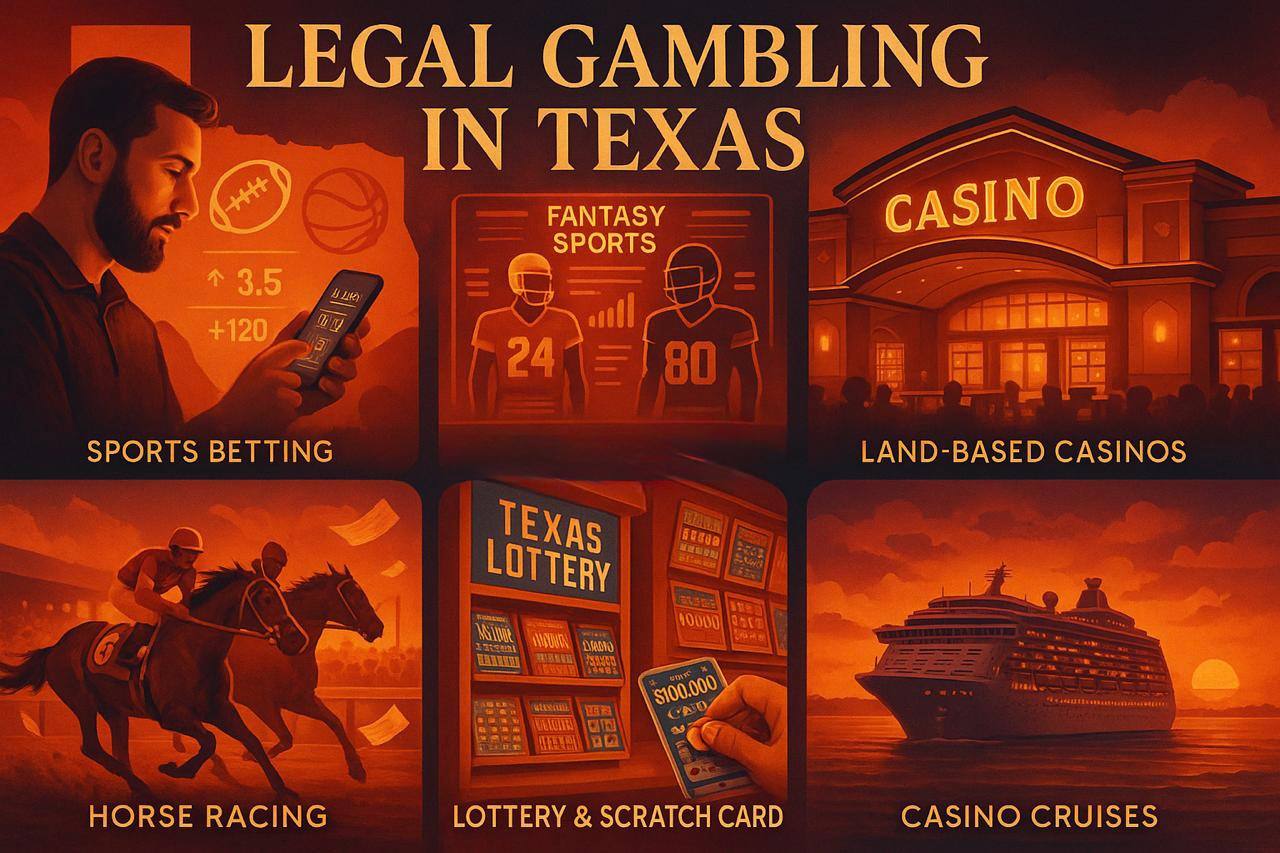
Can Texans legally place bets through Robinhood? Technically, yes. In 2024, the platform launched a feature called event contracts, allowing users to place binary Yes-or-No predictions on real-world outcomes using real money. These are not traditional sportsbook wagers but structured financial instruments.


For example, during the recent UFC fight between Max Holloway and Dustin Poirier, users could predict the winner and receive a fixed payout if correct. While the product is regulated as a financial derivative and not gambling, its mechanics closely resemble betting. Since it falls under federal financial regulation rather than state gambling laws, the feature remains fully accessible to Texas residents.
*Texans exploring legal sports betting in Texas: sign up with Robinhood via this link – and get a $5 bonus stock. Every 100th eligible signup receives a bonus stock worth up to $200.
Fantasy Betting in Texas
Fantasy betting are legal to access in Texas, even though they are not officially regulated. These platforms allow users to create virtual lineups of professional athletes and compete based on statistical outcomes of real-life games. Winnings are distributed based on performance, making the experience feel like a blend of gaming and betting.
Popular daily fantasy operators include: Noving (read review), DraftKings, Underdog Fantasy, PrizePicks


These services are active in Texas without formal licensing, existing in a legal grey zone. As the popularity of fantasy competitions grows, questions have emerged about how fantasy betting taxes apply in Texas, especially for high-volume players or large single-event wins.
Sweepstakes in Texas
Sweepstakes casinos are a growing alternative to traditional gambling in Texas. These platforms use virtual currencies often called gold coins and sweeps coins to simulate slot and table game experiences. Players can redeem sweeps coins for real cash prizes, all without requiring an initial purchase.
Well-known sweepstakes casinos accessible in Texas include: Stake.us (read review), Free Spin Casino (read review) Chumba Casino, Luckyland Slots, Pulsz


These platforms operate legally due to their compliance with sweepstakes laws rather than gambling regulations. They frequently host promotional campaigns tied to sporting events and holidays. While these games are legal to play in Texas, many users remain unclear about sweepstakes taxes and whether winnings must be reported.
Legal Casinos in Texas
While most forms of gambling remain illegal in Texas, there are three fully operational land-based casinos where Texans can legally play slots, poker, and enjoy live entertainment. These venues offer a rare legal casino experience within state borders, attracting thousands of visitors each week. Located in different parts of Texas, each casino operates under federal protections and provides a wide range of gaming machines and amenities similar to those found in Las Vegas – style resorts.
Kickapoo Lucky Eagle Casino is the largest legal casino in Texas, owned and operated by the Kickapoo Traditional Tribe. It features over 3,300 Class II electronic bingo machines, a dedicated poker room, and limited Class III gaming. Eagle Pass (794 Lucky Eagle Drive).
Naskila Casino is run by the Alabama Coushatta Tribe and provides more than 800 bingo-style terminals. Although its status is contested by the state, federal recognition and bipartisan congressional backing keep it fully operational. Livingston (540 State Park Road 56).
Speaking Rock Entertainment Center, owned by the Ysleta del Sur Pueblo, offers Class II gaming alongside live music, shows, and community gatherings. Despite ongoing legal scrutiny, it remains open and widely supported. El Paso (122 South Old Pueblo Road).
Poker in Texas. What is actually legal
Poker played for money in a public setting is prohibited in Texas. There is a narrow defense to prosecution when three conditions are met at once. The game takes place in a private place. No person receives any economic benefit other than personal winnings. Apart from the advantage of skill or luck the risks and chances are the same for all players. This is the legal hook Texas poker clubs rely on. They do not take a rake from the pot. They sell memberships and charge time or seat fees and tournament fees.
In 2024 the Fifth Court of Appeals in Dallas ordered the city to reinstate Texas Card House’s certificate of occupancy. The ruling did not legalize poker statewide. It confirmed the city board’s decision for that permit dispute and shows how outcomes can hinge on local decisions.
How Texas poker clubs usually operate
- Members only format with daily monthly or annual membership fees.
- No rake is taken from pots. Clubs charge seat or time fees and event fees instead.
- Clubs position games as private and enforce house rules to preserve the defense in Penal Code 47.02 b. Local enforcement can still vary.
Membership and seat fees at Texas poker clubs
- Membership pricing is typically day pass $10 to $20, monthly $25 to $50, annual $200 to $400.
- Seat or time fees commonly run $10 to $15 per hour, billed in 30 or 60 minute blocks. Some rooms offer discounted hour bundles.
- Tournaments take no rake from the prize pool, but add an event or admin fee, often $10 to $30 on top of the buy in.
- Many rooms also charge a one time new member signup fee around $10 to $20. Optional services such as lockers or parking vary.
Major poker clubs in Dallas: Texas Card House Dallas, Shuffle 214, Oak Cliff Card Club
Major poker clubs in Houston: Prime Social Club, Champions Club Texas, Texas Card House Houston
Major poker clubs in Austin: The Lodge Card Club, Texas Card House Austin, Shuffle 512
Major poker clubs in San Antonio: Rounders Card Club, SA Card House, Texas Card House San Antonio
Club lineups and local permitting can change quickly. Always verify current status and rules before visiting. The defense in Penal Code 47.02 b requires no rake and truly private play.
Horse and Greyhound Racing in Texas
Legal horse race betting remains one of the few regulated gambling options in Texas. Wagers can be placed on-site through pari-mutuel systems, with options for live races and nationwide simulcast events. While the market is niche, thousands of Texans visit racetracks during seasonal meets to legally bet on thoroughbred and quarter horse racing. Oversight is handled by the Texas Racing Commission, and licensed venues are concentrated in major metropolitan areas.
Sam Houston Race Park (7575 North Sam Houston Pkwy W, Houston) – Offers seasonal live racing, simulcast wagering, and events.
Lone Star Park (1000 Lone Star Pkwy, Grand Prairie) – Hosts thoroughbred racing and features a large simulcast theater. Lone Star Park Dollar Day Review: Legal Horse Racing in Texas read
Greyhound racing remains legal under Texas law but is no longer active. The last licensed dog track closed in 2020 due to persistent financial losses. No current greyhound racing is available statewide.
Texas Lottery, Scratch-Off Games
The Texas Lottery is one of the most active state-run gambling systems in the U.S., generating billions in annual revenue. The flagship game, Lotto Texas, was extended through 2027 by the Texas Legislature. Texans can also legally participate in nationwide draws like Powerball and Mega Millions through state partnerships.
Scratch – off tickets are a major part of lottery sales, with more than 90 active game variations available at any time. Prices range from $1 to $100 per ticket, offering a wide array of instant win formats across retail locations statewide.
Cruise Ship Casinos from Texas Ports
Cruise ship casinos offer Texans an easy and legal way to access full-scale gambling. Ships depart from the Port of Galveston and open their casinos after crossing into international waters, usually within six hours.
Onboard casinos provide slot machines, poker, blackjack, roulette, and other popular games. Texans can enjoy a Las Vegas–style experience without leaving the state. Carnival Cruise Line and Royal Caribbean are the top cruise operators offering multi-day trips to Mexico and the Caribbean with full casino access.
Some vessels also run shorter six-hour casino cruises. These quick trips let passengers gamble legally offshore in just one evening. Though more limited, they offer a convenient and affordable option for casual players near the Texas Gulf Coast.
Cruise prices typically start at around $250 per person for multi-day trips. Shorter gambling cruises cost less and attract those seeking fast access to legal casino action outside Texas law restrictions.
Future Outlook for Legal Gambling in Texas
As of 2025, Texas offers a surprising variety of legal gambling options including lottery scratch-offs, fantasy sports, sweepstakes casinos, and cruise ship gaming. While many popular forms remain restricted such as online casinos and regulated sportsbooks, the pressure for reform is stronger than ever.
Legislative proposals to legalize sports betting and land-based casino resorts continue gaining bipartisan support from major sports franchises, tourism leaders, and business coalitions. The introduction of event-based prediction markets like those seen on Robinhood further blurs the line between investing and betting in Texas.
Despite the current patchwork of rules, Texas appears on the verge of major change. Lawmakers are actively reviewing frameworks that could bring full legalization to online betting, brick and mortar casino resorts, and regulated sportsbook operations. This would finally place Texas among the top-tier gambling markets in the United States.
What’s Not Legal in Texas (But Commonly Searched) Despite public interest and lobbying, the following remain prohibited in-state: online casino texas, online slots texas, physical sportsbook locations