Introduction
Gambling in Oklahoma has one of the largest and most active tribal gaming industries in the United States. Its gambling history is a story of native traditions, tough state restrictions, the boom of tribal casinos under federal law, and a modern regulated market that remains highly competitive. Today, travelers and players alike explore the best casino options near North Texas as part of Oklahoma’s evolving gaming scene.
For many in Dallas, Oklahoma’s proximity makes it the perfect weekend escape. Just a short drive away, friends of mine often head to the nearest legal gambling near North Texas usually WinStar or Choctaw to enjoy poker nights and slot machine runs. While I haven’t joined them yet, I’m seriously considering taking one of those casino trips for North Texas sports fans soon. It’s become something of a tradition for locals who want to relax, play, and explore the WinStar Casino review for Texas players without crossing more than a county or two.
Pre-1900: Native Gambling Traditions and Early Settlers
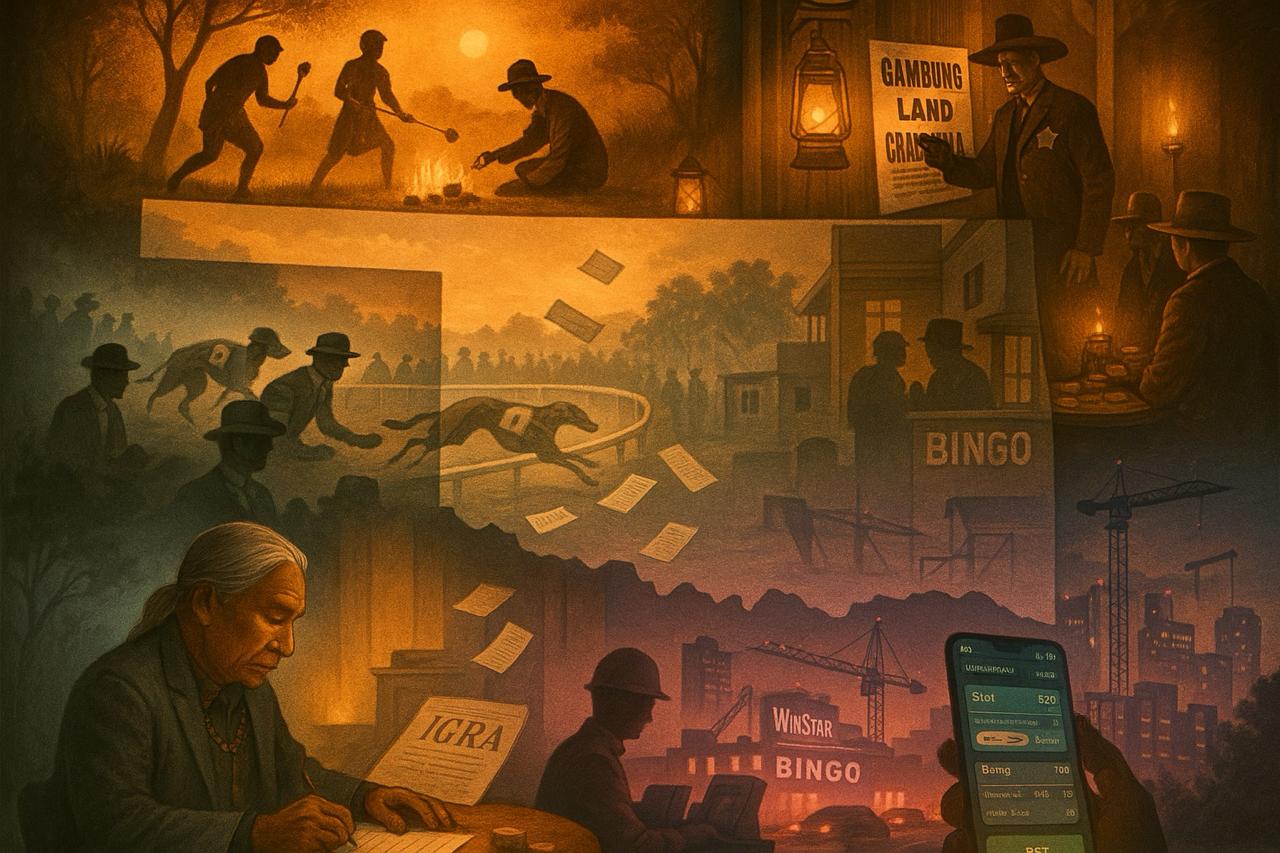
Long before Oklahoma became a state in 1907, the land was home to numerous Native American nations forcibly relocated here along the Trail of Tears. Many tribes, including the Cherokee, Choctaw, Creek, Seminole, and Chickasaw, brought traditional gambling games with them, such as stickball betting and dice games, which were central to ceremonial and social life (Source: Oklahoma Historical Society)
For Oklahoma residents who follow casino and slots news, sweepstakes social casinos have become a mainstream entertainment option over the past few years — particularly for players in parts of the state where tribal facilities are not conveniently located. The platforms are free to access, offer daily bonus coins, and include game libraries comparable to what you would find at a mid-size land-based casino. No purchase is ever required to earn or redeem Sweeps Coins. Reviews of the best-rated sweepstakes casinos for Oklahoma players are at oklahomasweepscasino.comDuring the 19th century, settlers and military forts also introduced card games, roulette, and saloon betting. Gambling was technically outlawed under territorial codes, but enforcement was sporadic, and many frontier towns tolerated poker and wagering as part of daily life. These informal games laid early foundations for what would later become some of the top 5 casino traditions now popular across Oklahoma.
1900–1930: Territorial Restrictions and Early Enforcement
By statehood in 1907, Oklahoma had embedded strict anti-gambling provisions in its constitution. This era saw crackdowns on public card rooms and betting halls with local sheriffs raiding saloons and traveling carnivals.
Despite these bans, underground poker games thrived in oil boomtowns like Tulsa and Bartlesville, where roughnecks and speculators wagered oil rights, land deeds, and cash. Gambling was both outlawed and part of the frontier economy with periodic moral campaigns against it. Even then, Oklahoma began attracting early casino trips for North Texas sports fans seeking excitement beyond the border.
1930–1980: Social Changes, Lotteries, and Greyhound Racing
In the 1930s and 40s, Oklahoma, like much of the South, struggled economically during the Dust Bowl and Great Depression. Although no state lottery existed, private “numbers” rackets and traveling carnivals offered illegal gambling.
In the 1950s and 1960s, Oklahoma authorized pari-mutuel greyhound and horse racing to raise revenue and regulate betting, with tracks opening in towns like Claremore and Sallisaw (Source: Encyclopedia of Oklahoma History and Culture)
Still, casino-style games and poker remained firmly illegal with police raids common. Underground card games in cities like Oklahoma City continued, often with local officials paid to look the other way. Despite restrictions, many considered Oklahoma to offer some of the best casino options near North Texas even in informal form.
1980–2004: The Rise of Tribal Compacts
A massive shift began after 1988 when the federal Indian Gaming Regulatory Act (IGRA) allowed tribal nations to negotiate compacts with states. Oklahoma tribes started opening high-stakes bingo halls and Class II gaming facilities, using electronic bingo games that resembled slots.
By the late 1990s, negotiations intensified over full-scale Class III gaming (slots and table games). The Chickasaw, Cherokee, Choctaw, Muscogee (Creek), and other nations invested in major facilities, creating thousands of jobs in rural areas.
Despite some state political opposition, tribes argued gaming revenue was essential for health care, education, and infrastructure in sovereign nations. The state’s reputation grew among Texas visitors seeking legal gambling near North Texas.
2004–2018: Casino Boom and Regulatory Shifts
In 2004, Oklahoma voters approved State Question 712, which formally authorized Class III compacts for slot machines and table games. This marked the beginning of a massive casino boom.
Dozens of full-scale tribal casinos opened or expanded, from major destinations like WinStar World Casino and Resort (the largest casino in the U.S.) to smaller travel center casinos throughout rural areas. The WinStar Casino review for Texas players became increasingly relevant as cross-border gaming surged.
By the mid-2010s, Oklahoma had over 130 tribal gaming facilities operated by more than 30 federally recognized tribes.
2018–2025: Current Legal Landscape and Casino List
Today, Oklahoma remains one of the largest gambling markets in the U.S. by casino count. There is no state-run lottery (except for charitable raffles and bingo), and sports betting is not yet authorized under state law as of 2025.
However, tribes have negotiated expanded compacts to allow sports betting if the state ever legalizes it. Online casino gambling remains prohibited except for social casino apps.
Example of Major Tribal Casino Owners and Properties
- Chickasaw Nation: WinStar World Casino and Resort (Thackerville), Riverwind Casino (Norman)
- Choctaw Nation: Choctaw Casino and Resort (Durant)
- Cherokee Nation: Hard Rock Hotel & Casino Tulsa, Cherokee Casino West Siloam Springs
- Muscogee (Creek) Nation: River Spirit Casino Resort (Tulsa)
- Comanche Nation: Comanche Nation Casino (Lawton)
- Osage Nation: Osage Casinos (multiple locations.
These facilities continue to draw in thousands annually, especially from the Dallas-Fort Worth metroplex. WinStar Casino travel from Dallas remains one of the most popular weekend excursions, alongside rising interest in newer properties.
Timeline Summary
- Pre-1900: Native stickball betting, dice games, early saloon gambling.
- 1907: Oklahoma statehood with constitutional gambling ban.
- 1930s–1960s: Illegal numbers games, authorized pari-mutuel racing.
- 1988: Indian Gaming Regulatory Act enables tribal negotiations.
- 1990s: High-stakes bingo halls, electronic gaming.
- 2004: State Question 712 legalizes Class III gaming.
- 2005–2018: Major casino expansion.
- 2025: Over 130 tribal gaming facilities, sports betting pending.
Key Questions Answered in This Article
- Why is Oklahoma considered a key gambling destination in the U.S.?
With over 130 tribal gaming facilities and two of the largest casinos in the world, Oklahoma plays a unique role in American gambling culture. - What is the closest legal casino to Dallas, Texas?
WinStar World Casino & Resort, located just across the border in Thackerville, is less than 90 minutes from Dallas and offers legal poker, slots, and more. - How did tribal gaming expand so rapidly in Oklahoma?
The passage of State Question 712 in 2004 formalized tribal compacts, unlocking Class III games and legalizing full-scale casinos across tribal lands. - Is sports betting allowed in Oklahoma?
As of 2025, sports betting remains unregulated, but ongoing negotiations with tribal nations may change this soon. - What makes Oklahoma’s casino industry unique?
The sheer scale, tribal sovereignty, lack of commercial casinos, and its geographic pull for players from Texas and surrounding states. - What are the best casinos near North Texas?
WinStar, Choctaw Durant, and Riverwind are consistently rated the top choices for Texas-based players seeking poker, slots, and entertainment.